Adjacent Segment Disease Definition
Adjacent Segment Disease is the result of stress overload to the upper and lower vertebrae forcing the intervertebral discs to break down. This is because the adjacent segment disease means that the issues developed in a different area of the spine than the area addressed in surgery.
Aosla Com Br
When ASD Starts Adjacent level degeneration resulting from a fusion surgery takes time to develop.
Adjacent segment disease definition. 711 The risk factors for ASD after lumbar fusion are still controversial and there have been few articles on ASD. As a secondary outcome they aim to determine risk factors predicting the occurrence of adjacent segment disease. When you have a neck segment fused the segments above and below the fusion have to take on the extra stress of providing as normal neck movement as possible and they are overworked and develop adjacent segment disease a rapid deterioration of the cervical spine. To understand adjacent segment disease sometimes referred to as adjacent segment degeneration or adjacent segment syndrome you first need to understand what happens during spinal fusion. Adjacent segment disease ASD is a broad term encompassing many complications of spinal fusion including listhesis instability herniated nucleus pulposus stenosis hypertrophic facet arthritis scoliosis and vertebral compression fracture. Adjacent segment degeneration is a common complication of spinal fusion occurring at the adjacent unfused level above or below the fused segment.
What is adjacent segment disease. The adjacent levels then tend to degenerate at an accelerated rate because of the increased load and stress. The simplest definition of adjacent segment disease is when something abnormal occurs in the segment next to or adjacent to the spinal fusion. Describes it as any degeneration that develops at mobile segments above or below a fused spinal segment5. Proximal junctional kyphosis PJK is a relatively more benign form of junctional pathology manifesting primarily as a minimally symptomatic radiographic diagnosis 16 19 25 26. Written by Joshua M.
ASD occurring within 3 years after primary PLIF was categorized as early-onset ASD. Incidences of adjacent segment disease after cervical fusion were reported by Hilibrand et al. Adjacent segment disease a known complication of spinal fusion can also be caused by degenerative changes in the back and neck. Adjacent segment disease in the lumbar spine following instrumented fusion Radcliff et al. Different Pain or Location Although pain may be experienced in the same location with ASD there is a good chance that the pain with ASD will differ in some way. Adjacent segment disease is a problem with a well-studied causal effect but with poorly understood risk factors including several individual factors hereditary and acquired and causes associated with the surgical procedure.
The definition of ASD was a symptomatic condition requiring an additional operation at the adjacent fusion segment in patients who had undergone PLIF. During a fusion surgery a surgeon removes a vertebral motion segment from your spinemade up of a disc and its. Adjacent segment disease ASD is a spinal disorder that may develop after spinal fusion eg instrumentation bone graft. In 1968 Williams et al. Degenerative changes develop on the discs and joints above or below the level where a previous surgery was performed. 6 In different studies due to the different definitions of ASD the incidence of ASD after lumbar fusion has ranged from 50 to 49.
Several authors have argued that adjacent segment disease ASD is part of the natural history of degenerative spinal disease4 6 7 However ASD is a known complication of anterior cervical discectomy and fusion ACDF and often times requires reoperationThis revision surgery can be an additional ACDF or a posterior cervical fusion. Adjacent segment degeneration ASD is a well-documented phenomenon that can occur after thoracolumbar or lumbar spinal fusion 5 6 1324. Epidemiology It is usually encountered in the cervical spine or lumbar spine and. The term adjacent segment disease had been defined as the development of new clinical symptoms that correspond to radiographic changes adjacent to the level of a previous spinal fusion. Fusion of a motion segment results in compensatory increase in motion and subsequently increased loads to adjacent levels which may accelerate degeneration. Attempts to define the incidence of adjacent-level disease or clinically apparent adjacent-level degeneration have been made by several authors.
In 1999 to occur in 29 year with 66 re-operation rate 12. Definition How could we define adjacent segment disease. 13 retrospectively studied 60 patients who underwent ACDF with an. We define it as any radiological changes developing at an adjacent segment not necessarily immediately next to a previously. Adjacent Segment Disease refers to a condition in which after a cervical or lumbar spinal fusion the levels adjacent to the fused level show degeneration which are readily seen radiographically. The investigators also look at the risk of adjacent segment disease after different anterior surgical techniques such as anterior cervical discectomy anterior cervical discectomy with fusion and plating and corpectomy.
It is when there are changes to the vertebra or vertebral disc above or below the fusion. Adjacent segment disease ASD is a potential long-term complication after lumbar fusion. Although ASD is widely known to be a potential complication of. This condition may or may not result in any symptoms but in many cases it may result in postoperative pain in the spine. Accelerated adjacent segment degeneration or adjacent segment disease attributes the fusing of one or two levels in the spine to increased stress at the remaining adjacent levels of the spine. Adjacent segment disease ASD is a condition that sometimes occurs after a spinal fusion surgery to join or lock two or more bones together stopping the natural motion at that level.
Most commonly these changes involve a bulging or herniated disc stenosis listhesis spondylosis or scoliosis. Adjacent segment disease is a progressed form of ASD adjacent segment degeneration in which symptoms you did not previously experience show up. For cervical discogenic conditions such as herniated discs and. The range of patients requiring additional surgery after fusion for adjacent segment disease at 5-6 years is 9-16. Reviewed the literature in MEDLINE regarding the frequency of ASD adjacent to a prior lumbar fusion Table 4 15 They asked whether the development of ASD was attributable to altered biomechanics due to the fusion itself or a result of natural disease progression.
Aosla Com Br

Adjacent Segment Disease And Back Pain

Cervical Adjacent Segment Disease Risks And Complications Following Cervical Fusion Caring Medical Florida

Adjacent Segment Disease And Back Pain

Cervical Adjacent Segment Disease Risks And Complications Following Cervical Fusion Caring Medical Florida
Aosla Com Br
Aosla Com Br
Adjacent Segment Disease Spine Center Atlanta

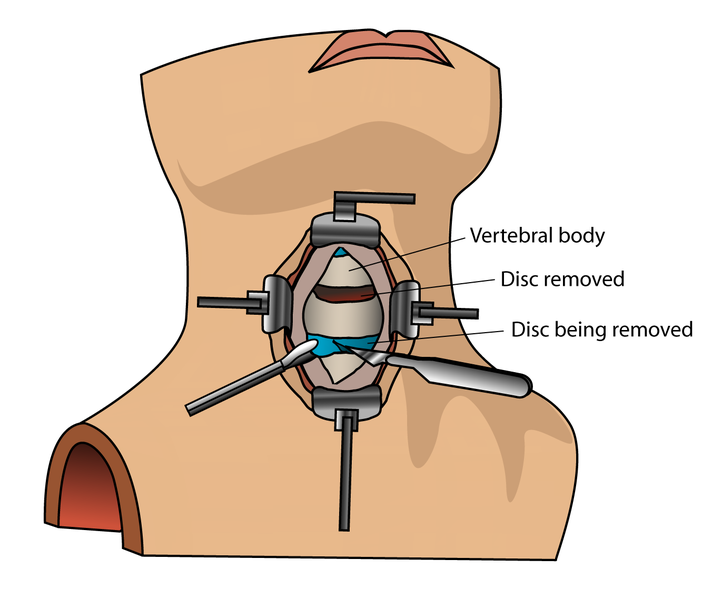
Adjacent Segment Disease Causes And Treatment Bone And Spine
Aosla Com Br

Three Cases Of Adjacent Segment Disease Post Posterior Spinal Fusion Treated Successfully By Oblique Lateral Interbody Fusion A Clinical Series Sakamoto 2019 Clinical Case Reports Wiley Online Library
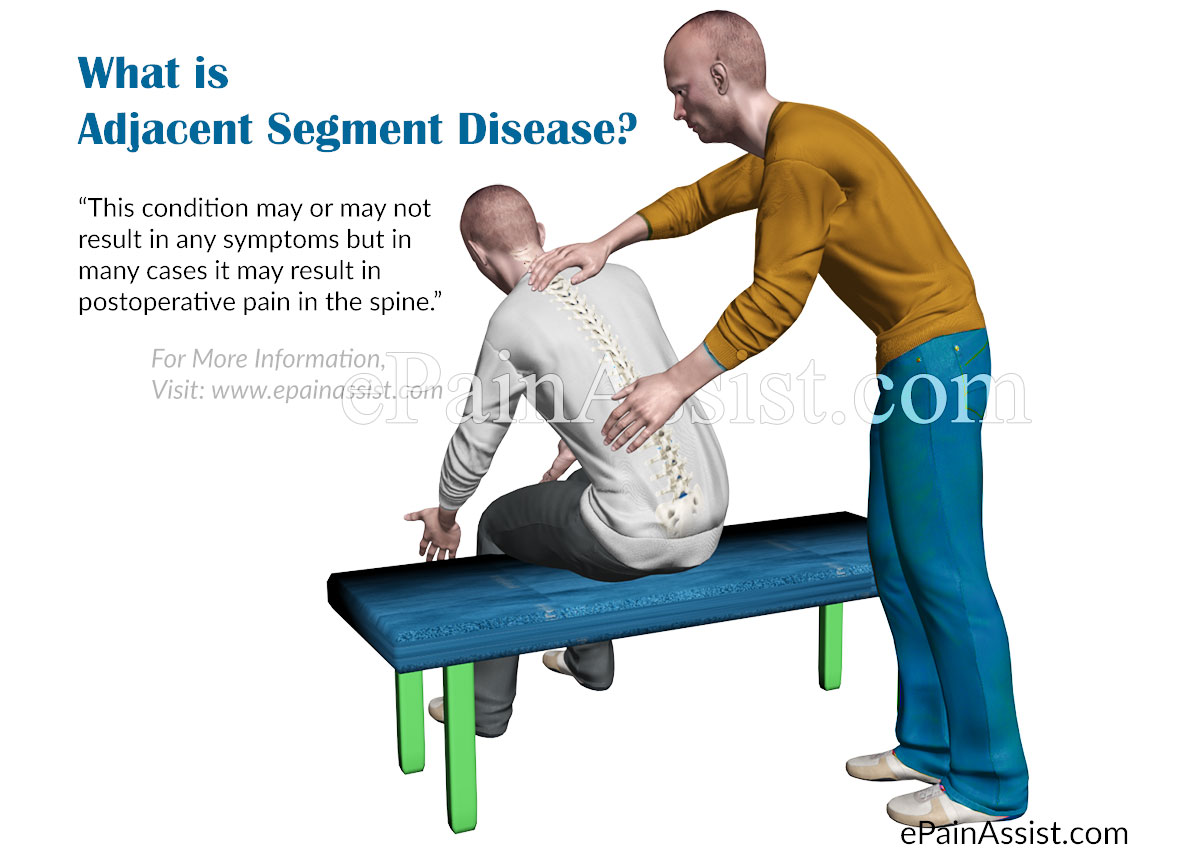
Adjacent Segment Disease Do All Spinal Fusion Patients Develop Adjacent Segment Disease

Three Cases Of Adjacent Segment Disease Post Posterior Spinal Fusion Treated Successfully By Oblique Lateral Interbody Fusion A Clinical Series Sakamoto 2019 Clinical Case Reports Wiley Online Library

Adjacent Segment Disease Patient Animation Youtube
Posting Komentar untuk "Adjacent Segment Disease Definition"